
UTILITY
MAINTENANCE
& INSPECTION



Manhole Vacuum Tests
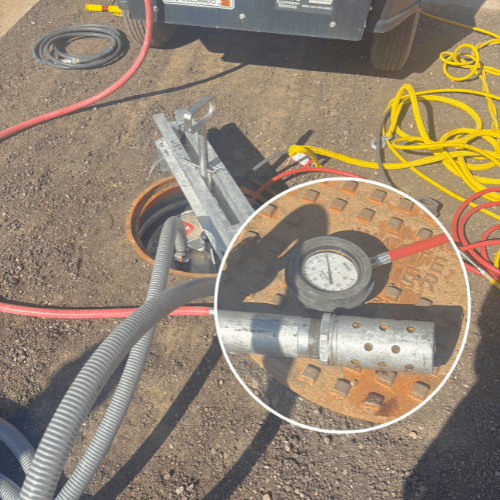
A manhole vacuum test is a process that uses a vacuum to identify leaks in a manhole structure by measuring the time it takes for a 10-inch mercury (Hg) vacuum to drop to 9 inches of mercury (Hg). The test involves sealing the manhole’s inlet and outlet pipes with temporary plugs and using a test head (either a flat plate or inflatable bladder) to seal the top. A vacuum pump then creates a negative pressure, and if the vacuum holds for the required time, the manhole passes; otherwise, repairs are needed.
Benefits of doing a Manhole Vacuum Test
The purpose of a manhole vacuum test is to verify the structural integrity and watertightness of a manhole before it goes into service or during maintenance checks
- Ensure there are no leaks – preventing groundwater from seeping in (infiltration) or sewage from leaking out (exfiltration).
- Protect the environment – stopping contamination of soil and groundwater.
- Reduce treatment costs – keeping excess water from entering sewer systems and overloading treatment plants.
- Confirm quality of construction/repairs – making sure joints, seals, and materials were installed correctly.
- Meet regulatory standards – most municipalities and utility companies require proof of watertightness before acceptance.
Utility Maintenance Inspection, LLC
@2025 All Rights Reserved. Website Built By Pink Hercules Media. Designed with WordPress